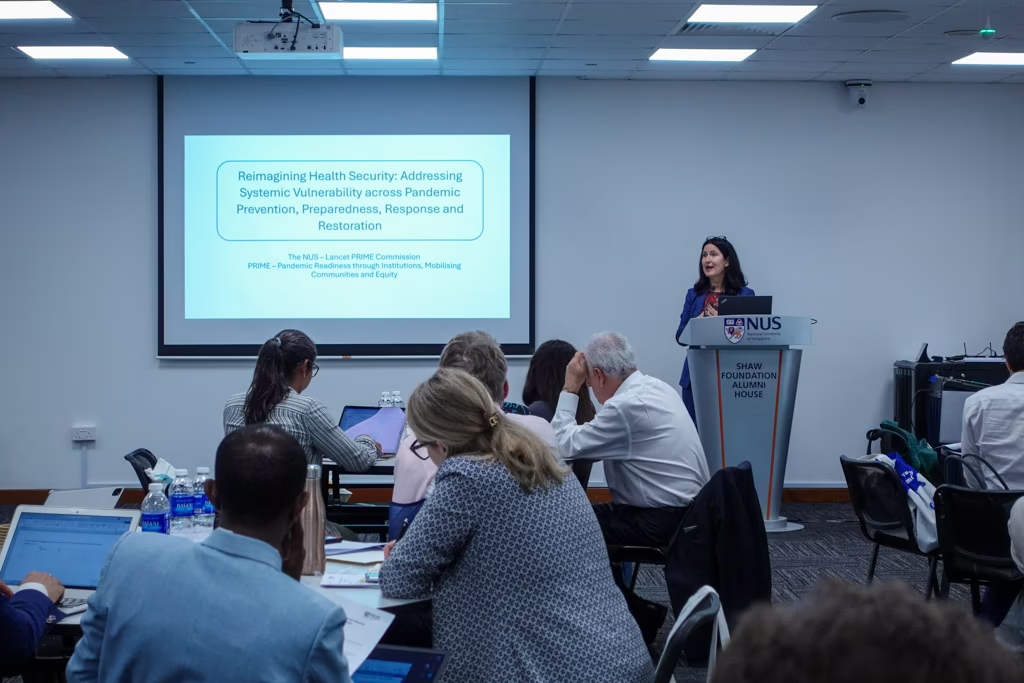
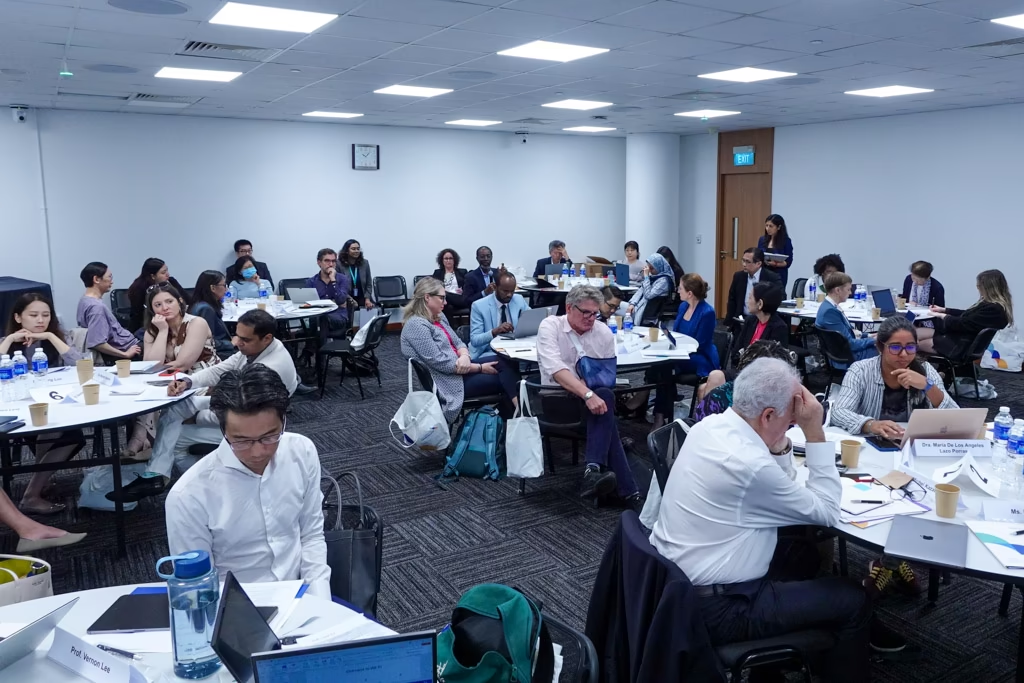
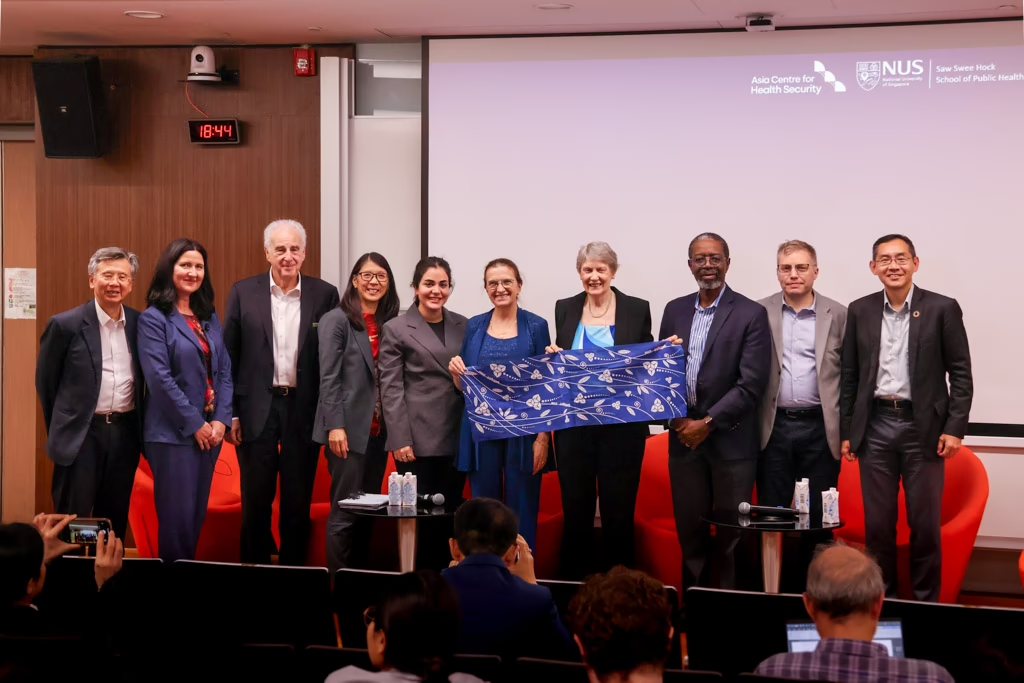
In-person meeting of The NUS-Lancet PRIME Commission, 15th – 17th January 2026, Singapore
The NUS-Lancet PRIME Commission convened in Singapore from 15–17 January 2026 to review progress and shape the Commission’s final report on pandemic prevention, preparedness, response and restoration (PPPRR). The meeting brought together Commissioners, researchers, country coordinators and collaborators to strengthen the report’s evidence base, recommendations and policy relevance. Rt. Hon. Helen Clark emphasised the Commission’s whole-of-society approach and the importance of ensuring that the experiences of communities, particularly disproportionately affected and marginalised groups, are reflected in the final recommendations. Participants also discussed plans to launch the report around the 2026 UN General Assembly and to sustain the Commission’s work through regional engagement, additional publications and policy advocacy.
A major focus of the meeting was the Commission’s conceptual framework of “reimagining health security through systemic vulnerability and capabilities.” Discussions highlighted how weaknesses in governance, financing, evidence systems, markets, communication and global cooperation can create or reinforce vulnerabilities during pandemics. The Commission emphasised that preparedness should extend beyond technical capacities to include people’s real ability to access protection and participate in decision-making. The proposed PRIME test was discussed as a practical tool for assessing recommendations, alongside broader capabilities approach that provides the ethical foundation for the Commission’s work. The Commission also highlighted the importance of recognising restoration and recovery as a fourth phase of pandemic management, alongside prevention, preparedness and response.
The meeting also reviewed findings from 20 country case studies, which examined pandemic experiences across diverse settings and disproportionately affected communities. These studies demonstrated the importance of local knowledge, community participation, trust, equity, governance and context-specific approaches to preparedness. Foresight exercises and quantitative modelling were used to explore possible future pandemic scenarios and assess the implications of different approaches to vaccine access, cooperation and preparedness. Participants stressed that modelling should support policy decisions rather than attempt to predict the future, and that greater attention should be given to behavioural and social factors such as vaccine confidence and acceptance.
The Commission identified several priority areas for action, including people-and community-centred preparedness; stronger One Health and multi-hazard approaches; trusted and accountable governance; sustainable domestic and regional financing; strengthened local and regional manufacturing capacity; equitable access to medical countermeasures; stronger regional and global cooperation; improved information integrity and communication; and constructive engagement with the private sector and industry. The meeting concluded with agreement to strengthen the report’s narrative, integrate evidence across local, national, regional and global levels, refine the recommendations and finalise the report ahead of the end-February deadline. The Commission will continue its work through its forthcoming website, stakeholder engagement, regional activities and advocacy to promote more equitable, resilient and people-centred pandemic preparedness.